
Small City Shade Garden
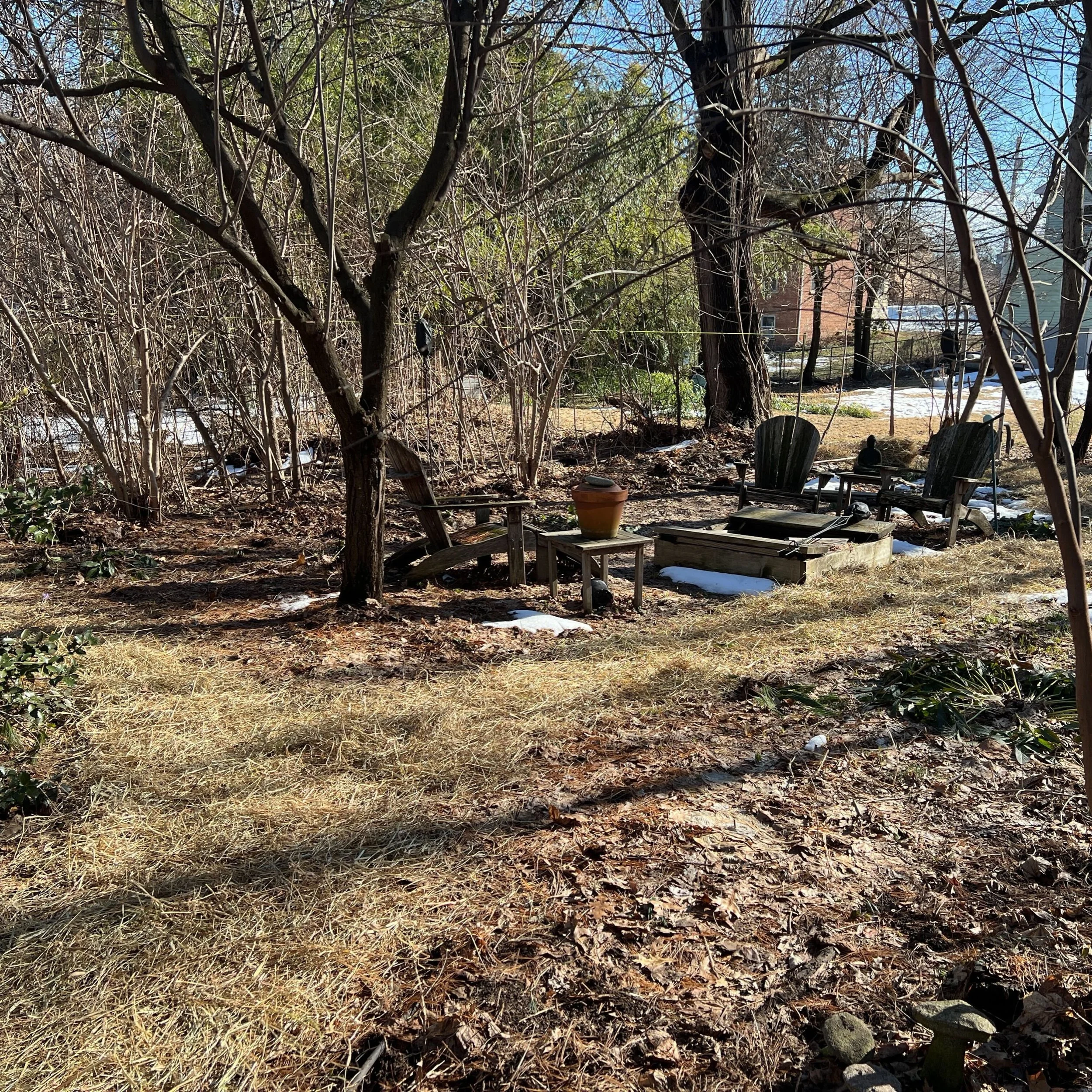
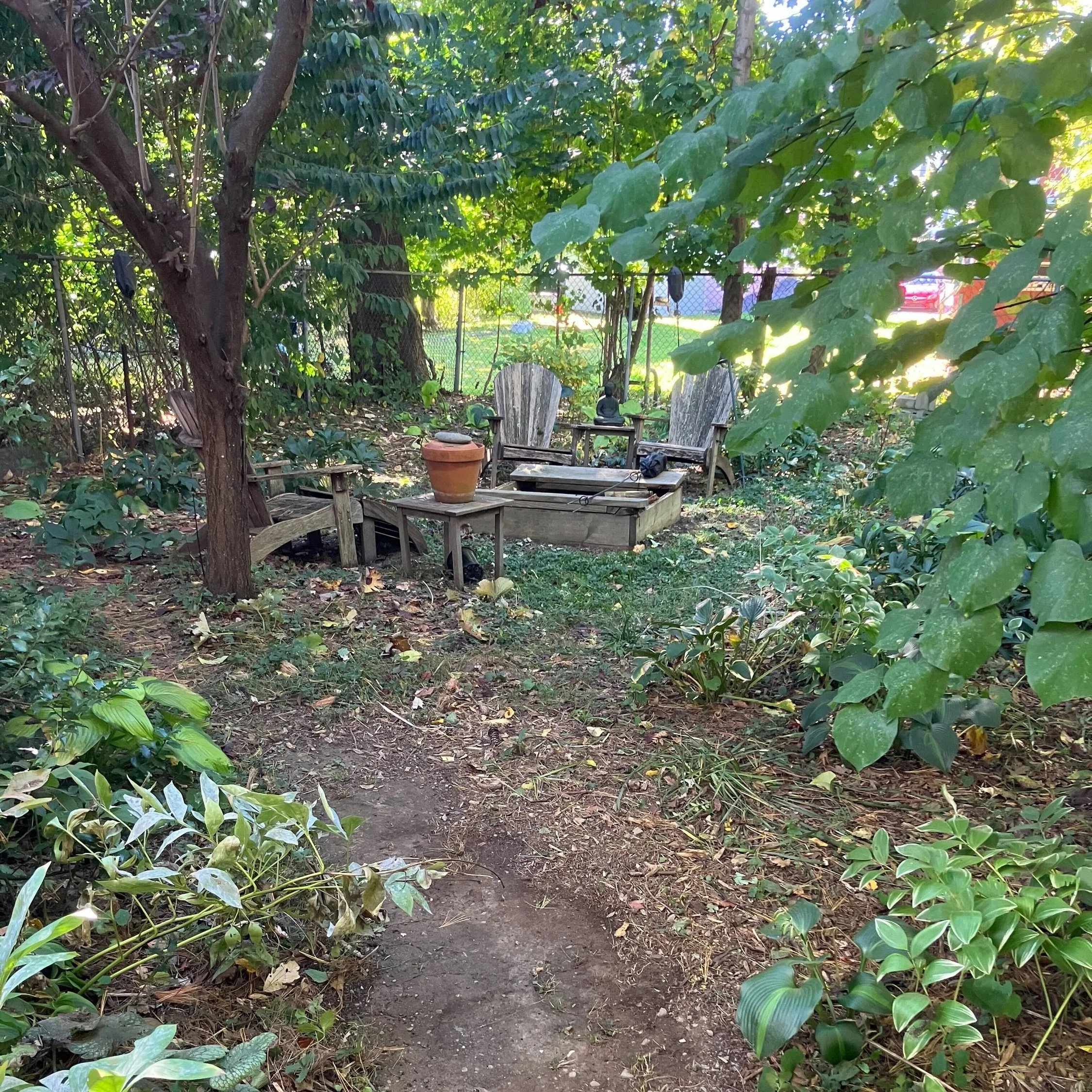
The best gardens don’t arrive all at once—they reveal themselves gradually, shaped by time, attention, and a willingness to evolve. As Rumi wrote, “The garden of the world has no limits, except in your mind.” It’s a reminder that even the most compact spaces can feel expansive when they’re allowed to grow, shift, and surprise us over time. What begins as a simple framework deepens season by season, each layer adding texture, meaning, and a stronger sense of place. If you could step back into this garden as it was last summer, you’d see the early stages of that unfolding story—already beautiful, but still becoming.
Our client had devoted years to cultivating the foundation, establishing structure and rhythm with a palette that leaned heavily on non-native plantings. Those early choices gave the garden form and maturity, but also opened the door for a new direction. In recent seasons, we’ve been thoughtfully weaving in native species from our nursery—plants that not only root the garden more firmly in its regional identity, but also invite a richer ecological dialogue. The result is a subtle but meaningful shift: a garden that feels more connected, more alive.
This is, at its core, a shade garden—and that brings its own quiet advantages. These cooler, sheltered conditions create a kind of niche biodiversity, where shade-tolerant plants, fungi, and insects can thrive alongside one another. The layered canopy and understory offer refuge for birds, providing cover, nesting opportunities, and a steady source of food. Even on the hottest days, the garden holds onto a gentle microclimate—cooler, more humid, and noticeably calmer than the surrounding city. It’s a different kind of richness, less about abundance in full sun and more about subtle relationships and resilience.
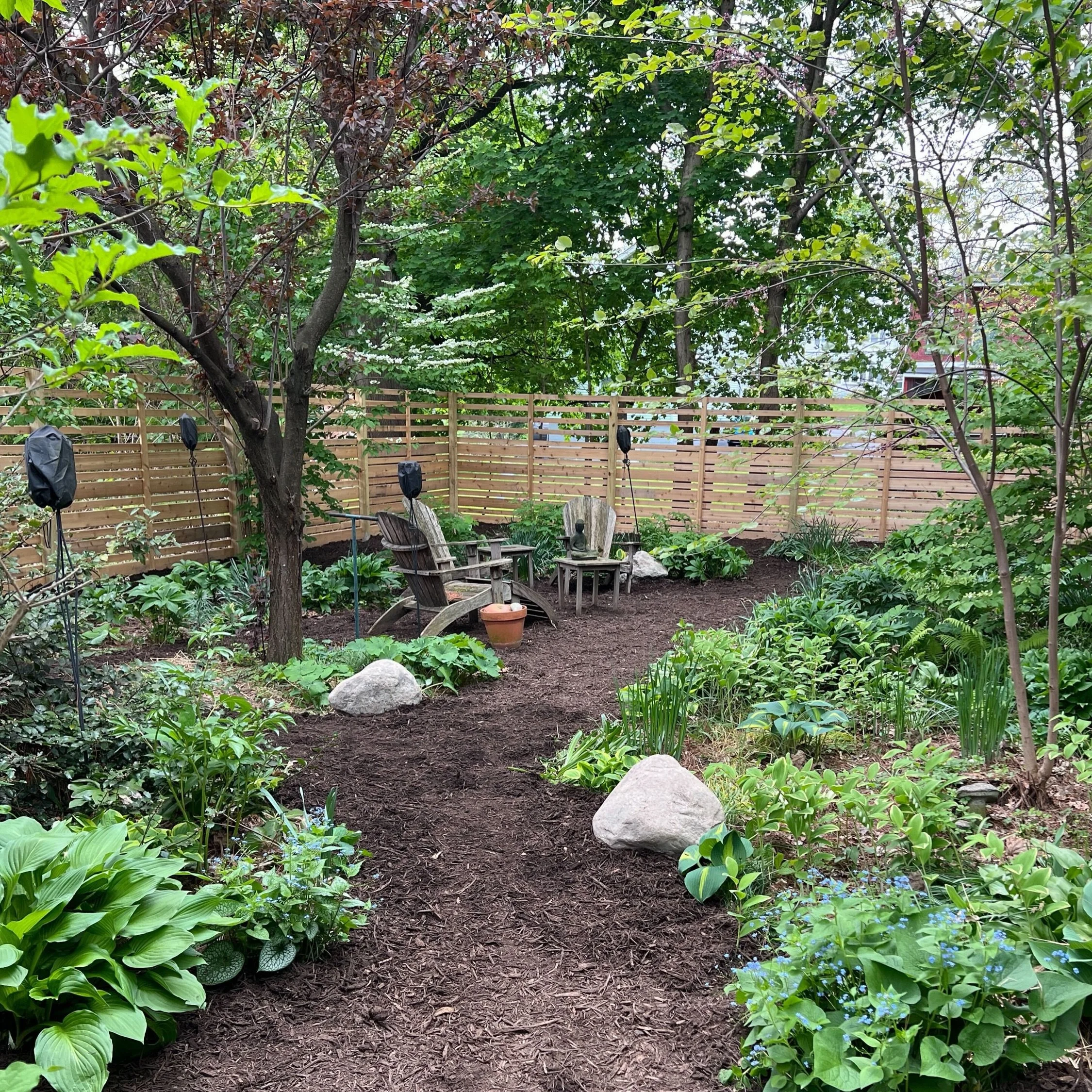
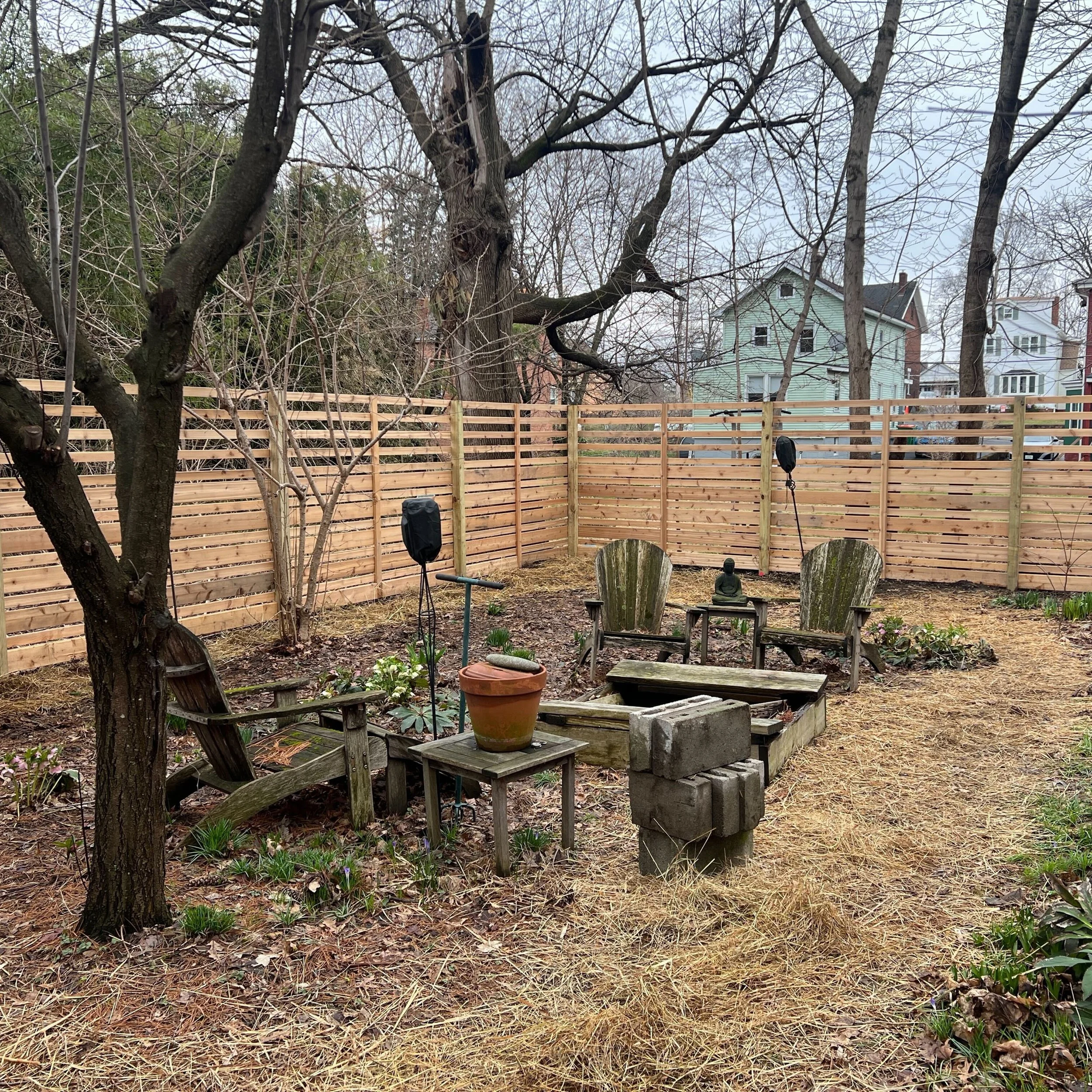
This past winter brought a quiet but transformative addition—a warm hemlock wood fence that frames the space with a sense of enclosure and calm. Its natural tones echo the surrounding plantings, softening boundaries while enhancing intimacy. And just this week, we refined the garden’s circulation, gently re-aligning the paths to draw the eye—and the experience—toward its most remarkable specimens. These small adjustments change how the garden is read and moved through, allowing each moment to feel more intentional.
What was already a charming city garden has settled into something even more inviting and full of personality. It feels like it’s found its rhythm—where earlier choices and newer additions play easily together. There’s a natural ease to the space now, and each season brings something slightly different, keeping it interesting in that quiet, unforced way that makes you want to linger a little longer.