
Reimagining Play: Where Ecological Systems and Community Meet
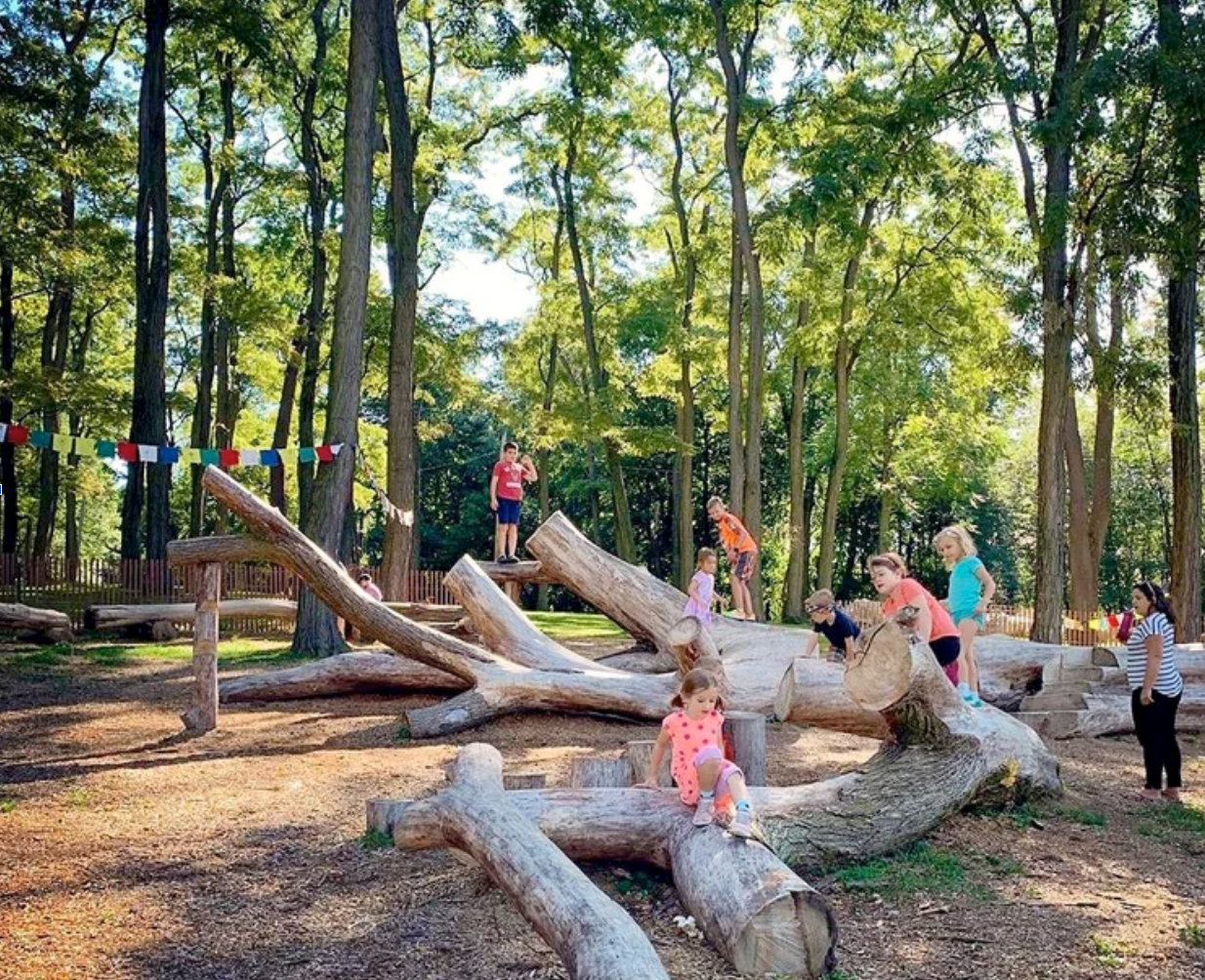
A massive elm tree repurposed into a climbing structure.
In an era increasingly defined by screens, schedules, and structured environments, the spaces we create for children—and for ourselves—carry profound importance. Across parks, preserves, and community landscapes, a quiet movement is taking shape: one that rethinks play not as a collection of plastic structures, but as an invitation to reconnect with the living world. The projects explored here reflect a shared philosophy—one that places ecology, material honesty, and community at the center of design.
At the heart of this approach is the belief that landscapes themselves can be teachers. The Vassar Learning Forest offers a compelling example. Rather than reshaping the land to fit a preconceived design, the project began by observing what already existed. A former stone storage site had, over time, evolved into a perched wetland—an accidental but thriving ecosystem. Instead of removing or “correcting” these conditions, the design embraced them. Subtle interventions, such as a gently flowing stream and small waterfall, enhanced biodiversity while maintaining ecological balance. Plank pathways allowed visitors to move through the space without disturbing sensitive soils, creating an immersive environment where observation and stewardship go hand in hand. What emerged is not simply a landscape, but a living system that invites people to slow down and engage more deeply with the rhythms of our ecoregion.
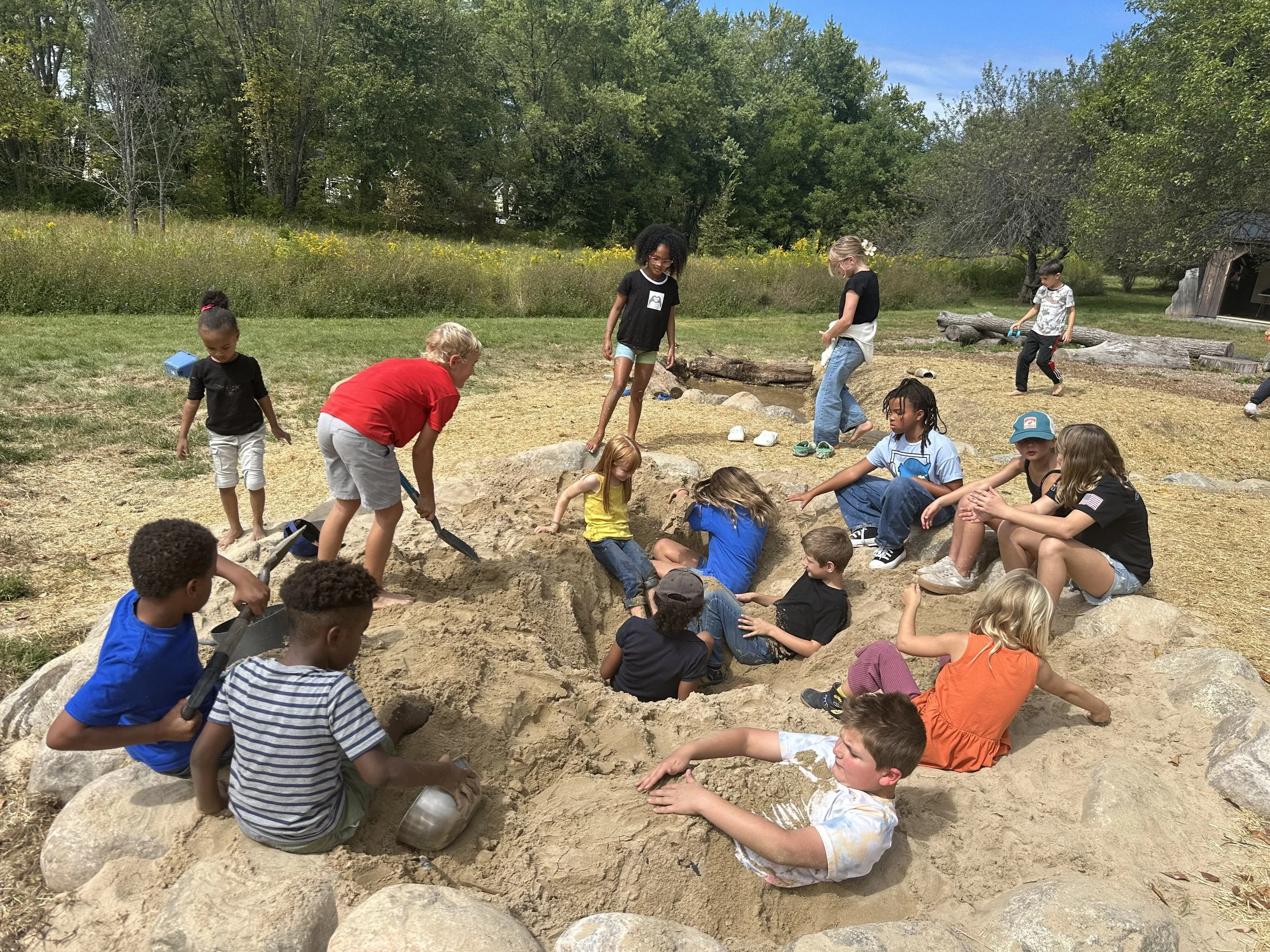
A sand and boulder pit adjacent to a small created stream.
This same philosophy extends into more explicitly playful environments, such as the Forest Playground at Memorial Park in Beacon, New York. What began as a grassroots effort by local families evolved into a vibrant, nature-based play space shaped by community vision. Parents and residents expressed a desire for fewer synthetic structures and more opportunities for exploration, creativity, and connection to the outdoors. The result—known as Wee Woods—is a landscape where play is integrated into the environment itself.
Here, trees become climbing structures, pathways become journeys, and plantings form living architecture. A grove of fast-growing poplars doubles as a natural maze, while willow tunnels create magical passageways between spaces. Even fallen or diseased trees are given new life as sculptural play elements, emphasizing reuse and local material sourcing. The project not only supports imaginative play but also contributes to ecological restoration, gradually restoring the rhizosphere of a formerly denuded copse of black locust trees. Just as importantly, it stands as a testament to what can happen when communities take ownership of their shared spaces.
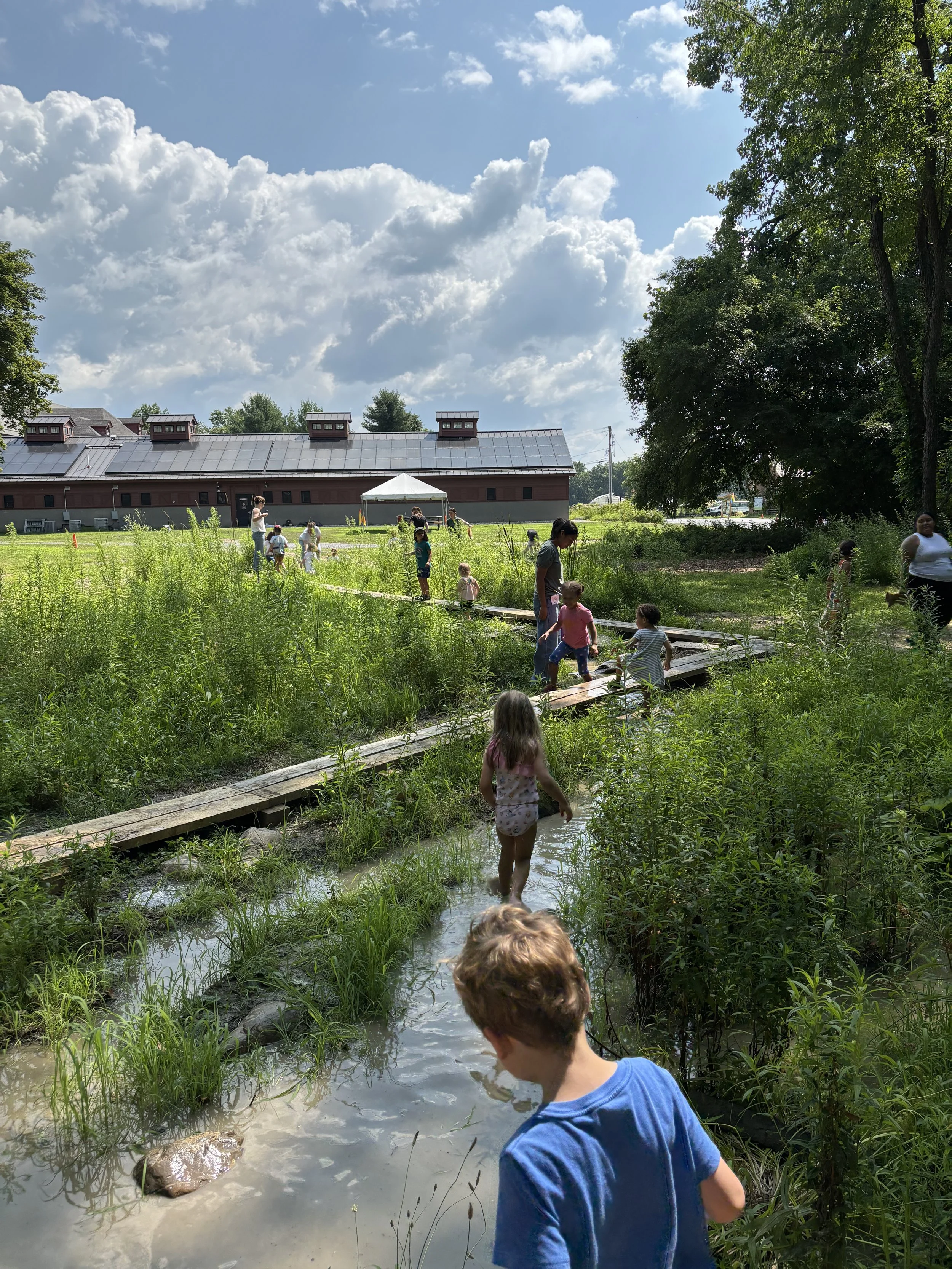
A perched wetland and plankway encourages unstructured exploration.
A similar sensitivity to both place and people defines the Community Play Space at the Hester Haring Cason Preserve. Situated within a larger landscape shaped by agricultural history and conservation efforts, this project takes a deliberately light-touch approach. Rather than imposing a fixed design, it allows the site to evolve through incremental, responsive interventions. The play environment—constructed entirely from locally harvested logs—encourages open-ended use, supporting everything from climbing and balancing to gathering and quiet observation.
Positioned beside an intermittent stream and framed by meadow views, the space invites intergenerational interaction. It acknowledges a growing concern often referred to as “nature deficit disorder” by offering direct, tactile engagement with the landscape. In doing so, it becomes more than a playground; it becomes a place where relationships—to land, to community, and to one another—can deepen over time.
Perhaps the most expansive expression of this philosophy can be found in the Responsive Landscape at Roots and Wings Village. Here, the goal was not to install a playground at all, but to create a living work—an environment that functions simultaneously as art, landscape, and social space. Built from locally harvested logs and shaped through an intuitive, site-driven process, the central play structure invites risk, creativity, and exploration without prescribing outcomes.
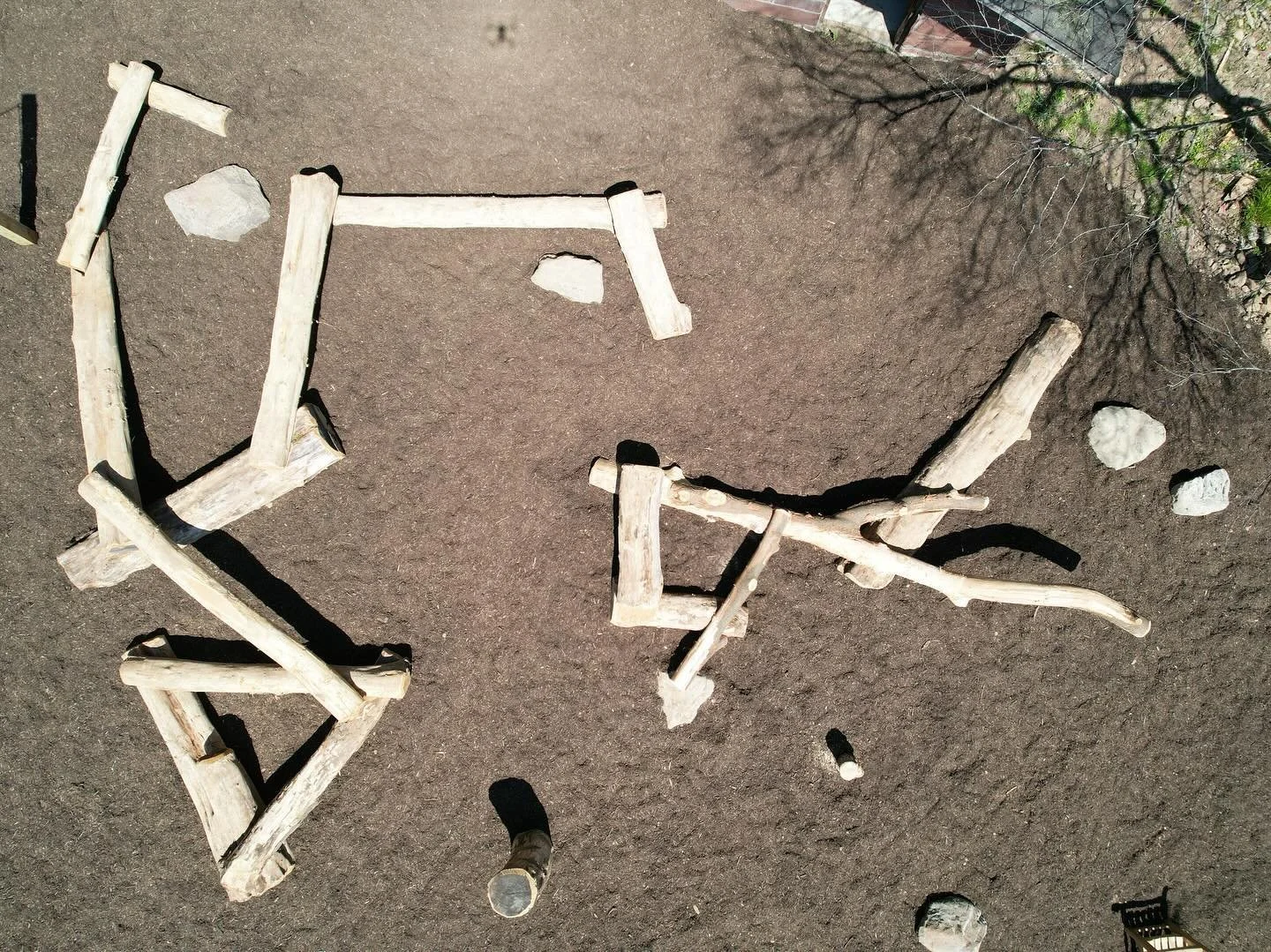
Overhead view of climbing structures from locally harvested black locust trees.
Yet the project extends far beyond its physical elements. Earthworks, streams, and sand areas form an interconnected system where children can engage directly with natural forces—redirecting water, shaping terrain, and learning through experience. The space evolves continuously, shaped by weather, use, and the rhythms of the community that gathers there. It operates as a kind of “social sculpture,” where relationships and shared experiences are as integral as wood, water, and soil. What exists is not a finished product, but an ongoing process—an environment that grows alongside the people who inhabit it.
Taken together, these projects point toward a broader redefinition of what public and communal spaces can be. They challenge the notion that play must be standardized or manufactured, instead offering environments that are dynamic, responsive, and deeply rooted in place. By working with natural materials, honoring existing ecological systems, and engaging communities in the design process, these landscapes foster not only play, but connection—between people, and between people and the living world.
In reimagining these spaces, we are also reimagining our role within them—not as passive users, but as participants in an ongoing dialogue with the land. And in that dialogue, there is the possibility of something far more meaningful than recreation alone: a renewed sense of belonging, responsibility, and wonder.